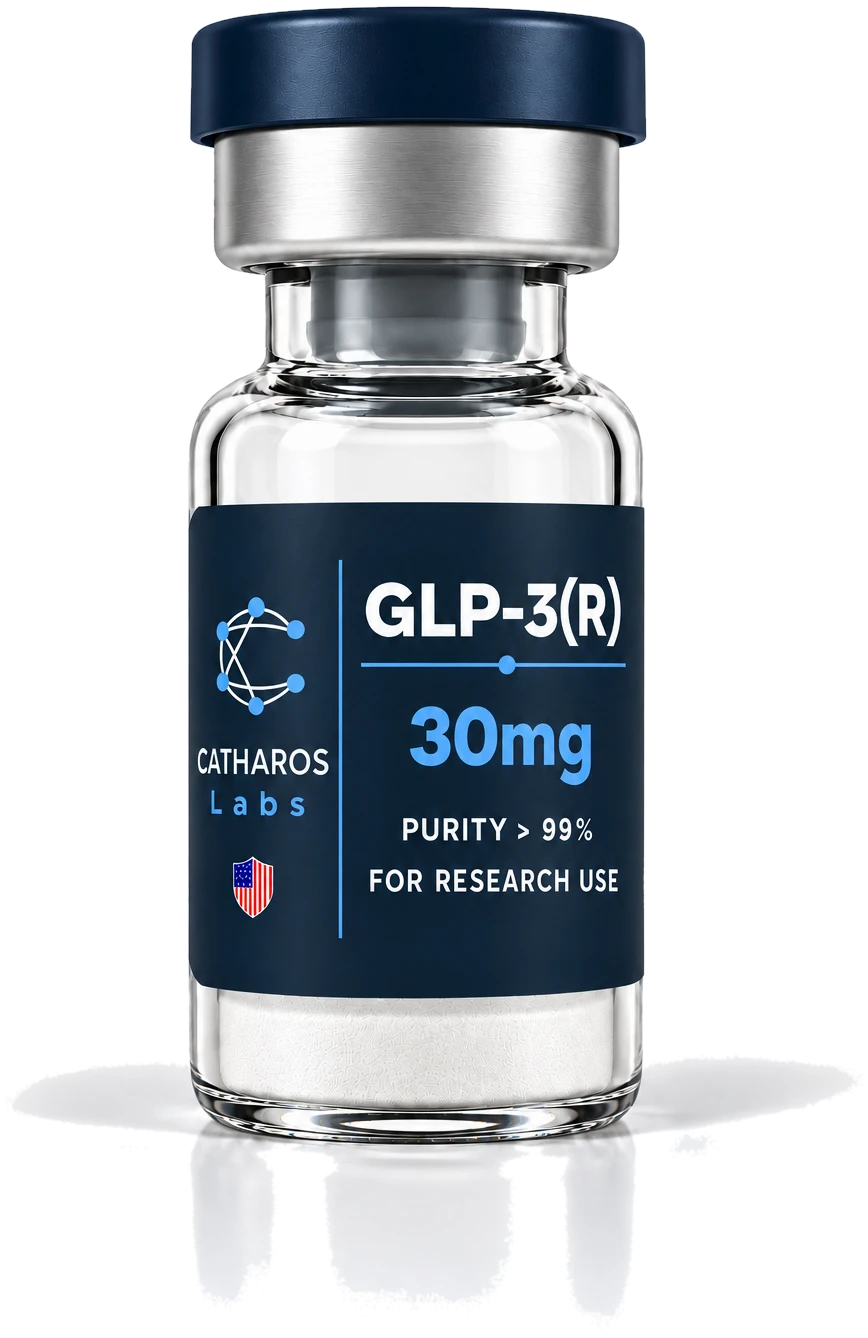
Every batch we sell is tested by an independent, accredited third-party laboratory before it ships. Anyone can claim that. Here's what a real one actually looks like, and how to read it - click a step below to see exactly where it shows up.
This is GLP-3 (RT3), lot PS07-R330 - the certificate below is its actual lab report. Click a step to see where it shows up.
Every other product in the catalog is awaiting stock and testing. As more batches clear the full panel, this page becomes a searchable library of every certificate we've published - nothing gets listed before its lab report exists.
"Independently verified" only means something if the lab has nothing to gain from how the results turn out. Here's why that separation actually matters.
ILS gets paid for running the test, not for the result. A passing batch and a failing one are worth the same to them - which means they have no reason to be generous with the numbers.
ISO/IEC 17025 isn't a certificate you earn once and keep forever. It requires periodic external audits of ILS's own methods and equipment - the lab checking us is itself being checked.
Plenty of sellers run their own in-house tests and call it verified. That's grading your own homework. Every result on this site comes from a lab with zero involvement in whether we sell another vial.
Every category below runs on every batch we sell - not spot-checked, not upgraded for flagship products only.
A vial that doesn't look right doesn't move on to the rest of the tests - it's the first checkpoint, before anything else.
A purity percentage with nothing behind it is a claim. HPLC is what turns it into something checkable.
Reported rather than pass/fail, since this is about telling you what's really in the vial, not grading it against a threshold.
A high purity number is meaningless if it's the wrong molecule - this is the check that rules that out.
Arsenic, cadmium, lead, mercury, and chromium - each measured individually against its own ppm limit.
Not something you can see, smell, or otherwise detect without a lab - the only real way to confirm a sealed vial is actually clean.
Catches something a sterility test alone can miss - endotoxins can survive sterilization intact.
Not a purity metric - a backstop safety check that runs on every batch, regardless of source or compound.